In today’s competitive market, visual representation plays a crucial role in communication and marketing. Businesses across various industries are increasingly relying on 3D rendering services to bring their ideas to life. From architects and real estate developers to product designers and marketers, the demand for high-quality visualizations has skyrocketed. This article delves into the benefits, applications, and key considerations when choosing a 3D rendering service.
Understanding 3D Rendering
3D rendering is the process of creating a two-dimensional image from a three-dimensional model. This technique involves the use of specialized software and hardware that transforms geometric data into realistic visuals. The end result is a lifelike representation that can be used for various purposes, such as marketing, presentations, or design validation.
There are several types of 3D rendering, including real-time rendering, which is commonly used in video games and simulations, and photorealistic rendering, which aims to create images that are indistinguishable from photographs. Each type serves different needs and applications, making it essential for businesses to understand what they require.
Benefits of Using 3D Rendering Services
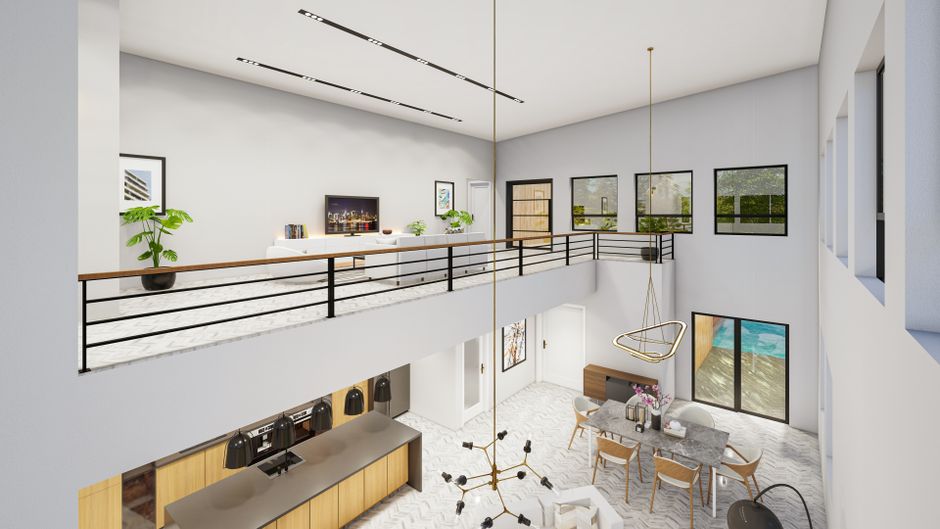
One of the most significant advantages of employing 3D rendering services is the ability to visualize concepts before they are built. This not only aids in design refinement but also allows stakeholders to see the final product in a realistic context. For instance, architects can showcase their designs to clients, helping them make informed decisions and adjustments early in the process.
Moreover, 3D renderings can enhance marketing efforts. High-quality visuals can be used in promotional materials, websites, and social media campaigns, significantly increasing engagement and interest. Statistics show that products presented with 3D renderings can experience up to a 30% higher sales conversion rate compared to those without.
Applications of 3D Rendering in Various Industries
The applications of 3D rendering are vast and varied. In the architecture and construction industries, 3D renderings are used to create detailed representations of buildings and landscapes. This helps clients understand the project’s scope and visual appeal, fostering better communication between architects and clients.
In product design, companies utilize 3D rendering to visualize prototypes and concepts. This allows designers to experiment with different materials, colors, and textures without the need for physical prototypes, saving time and costs. The automotive industry also benefits from 3D rendering by showcasing new models and features before they hit the market.
Choosing the Right 3D Rendering Service
When selecting a 3D rendering service, it’s crucial to consider several factors. First, assess the portfolio of potential providers. High-quality renderings should showcase a range of styles and applications, demonstrating the company’s versatility.
Next, consider the technology and software used by the service provider. Advanced tools can significantly enhance the quality and realism of the renderings produced. Furthermore, communication is key; ensure that the service provider understands your vision and requirements clearly.
Conclusion
In conclusion, 3D rendering services offer valuable solutions for businesses looking to visualize their ideas and improve communication with clients. By leveraging these services, companies can enhance their marketing efforts, streamline their design processes, and ultimately achieve better results. As the demand for high-quality visuals continues to rise, investing in professional 3D rendering services is becoming increasingly essential for success in today’s market.
About the Author